



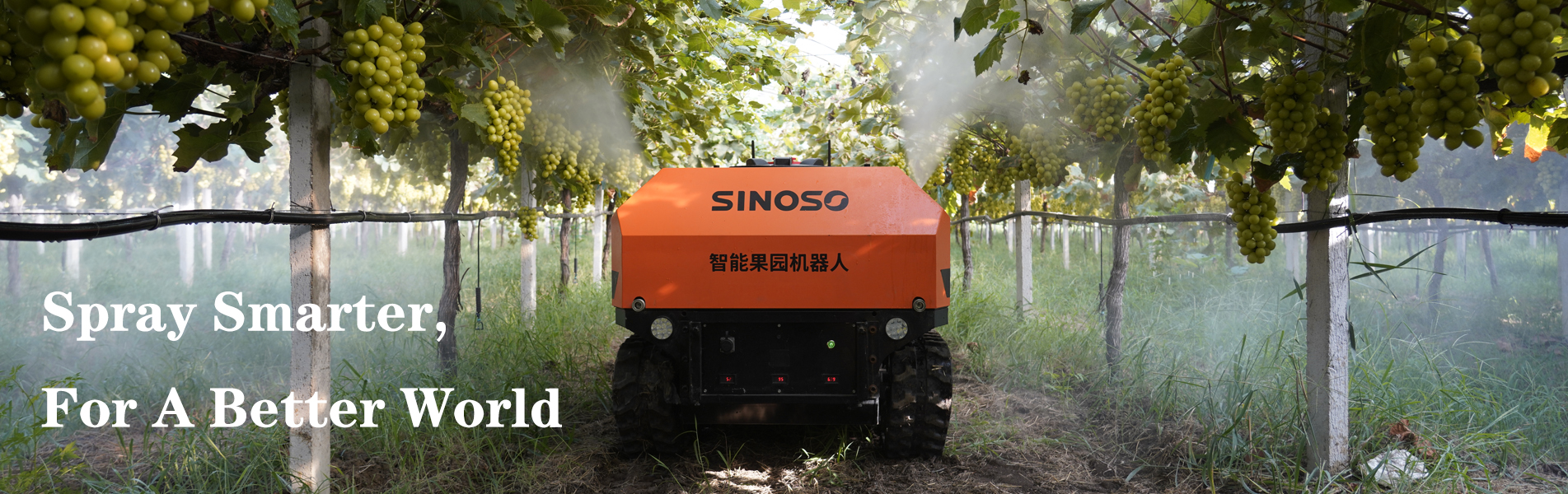
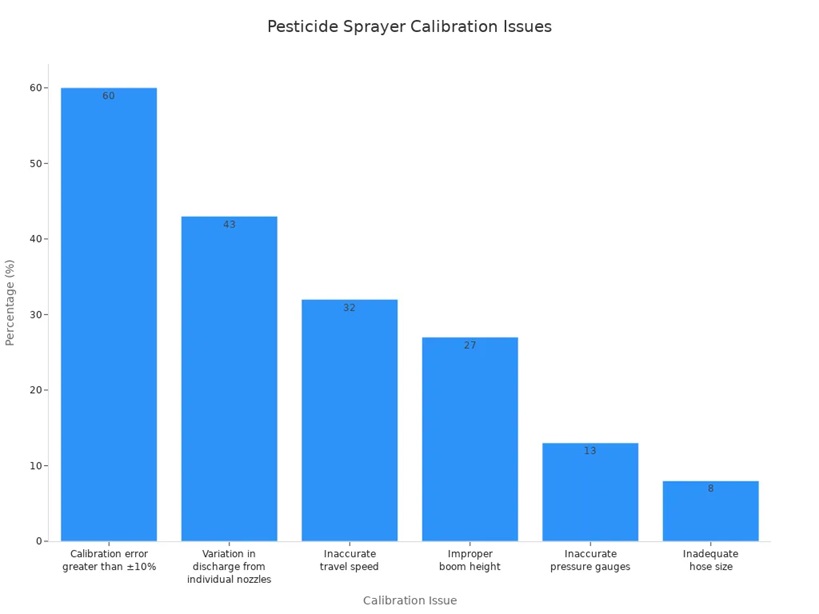
You can improve how well pesticides cover your orchard by using an orchard air-blast sprayer. Focus on setup, calibration, timing, and maintenance. Small changes in nozzle choice, air settings, and calibration help you get better spray results. Studies show that calibration mistakes bigger than ±10% affect 60% of sprays. Nozzle discharge changes affect 43% of sprays. Look at the chart below for more information:
If you adjust your sprayer carefully, you cover more of the canopy. You also use less pesticide. Many growers say they get more fruit and better pest control after making these changes.
Key Takeaways
-
Pick the correct nozzle for your orchard air-blast sprayer. This helps make droplets the right size. It also helps cover more area. You will control pests better.
-
Check your sprayer’s calibration two times each year. Good calibration helps you use the right amount of pesticide. This also helps you save money.
-
Spray at the best times, like early morning or late evening. This stops too much evaporation. It helps the pesticide soak in better.
-
Clean and take care of your sprayer often. This stops clogs from happening. It helps the pesticide work well.
-
Use water-sensitive cards to see how well you spray. This lets you change settings for better coverage. You will waste less pesticide.
Orchard Air-Blast Sprayer Setup
Nozzle Selection
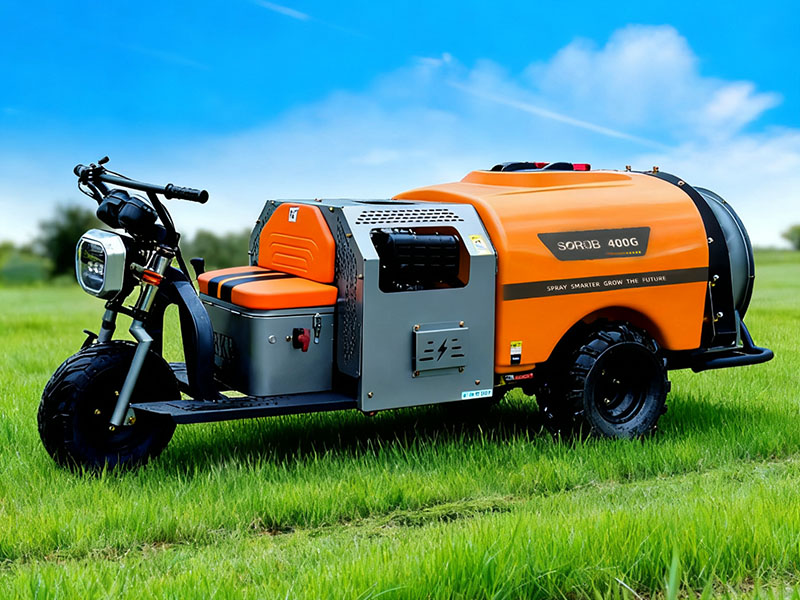
Choosing the right nozzle for your orchard air-blast sprayer makes a big difference in how well you cover your trees. Most growers use disc-core nozzles or air induction nozzles. Disc-core nozzles create droplets that range from 100 to 340 micrometers. These droplets change size if you adjust the pressure or if the nozzle wears out. Air induction nozzles mix air into the spray, making bigger droplets. These larger droplets drift less and work well in thick canopies.
-
Air blast sprayers help you cover large areas quickly.
-
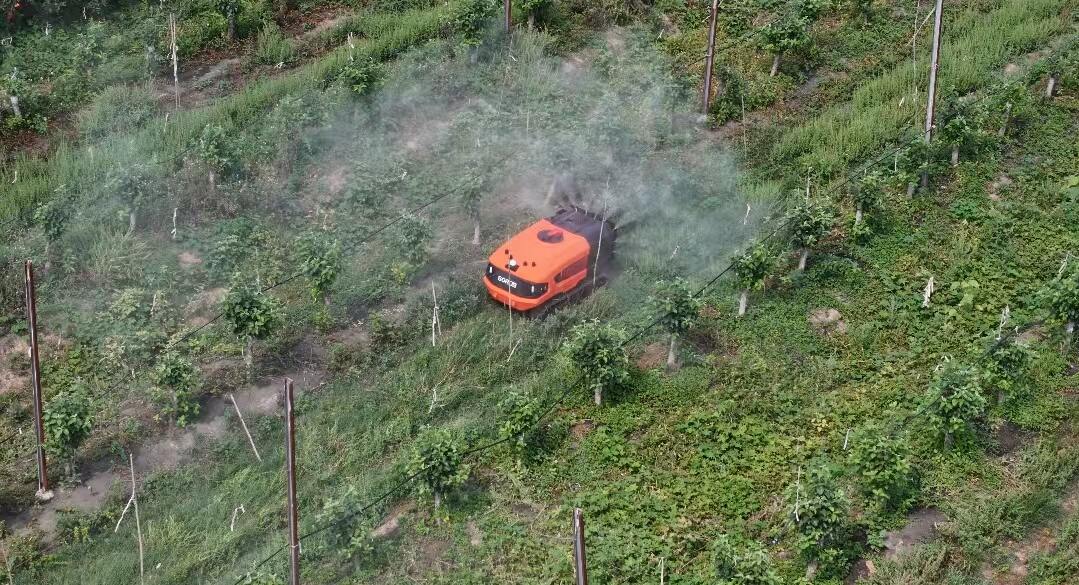
High-pressure air turns the spray into a fine mist that reaches deep into the foliage.
-
This method lets you treat every part of the tree, even spots that are hard to reach.
Smaller droplets stick better to leaves and give you a more even spray. They also reach deep into the canopy, where pests often hide. Always check the pesticide label for the right droplet size. Some jobs need finer droplets for better coverage, while others need coarser droplets to reduce drift.
Tip: Replace worn nozzles often. Worn nozzles change droplet size and can waste pesticide.
Air and Pressure Settings
You need to set the air and pressure correctly to get the best results from your orchard air-blast sprayer. Pressure should match the nozzle’s requirements. Watch the pressure gauge to keep it steady. If the pressure changes, the spray pattern changes too.
|
Recommendation |
Details |
|---|---|
|
Pressure Settings |
Match pressure to nozzle needs. Check gauges often to avoid mistakes. |
|
Airflow Management |
Use air-assisted sprayers. Adjust fan speed for tree height and canopy. |
|
|
Spray from different angles to reach both sides of leaves. |
Adjusting air velocity and pressure helps you control drift and improve coverage. Studies show that using air louvres can increase spray deposition by 30% and cut drift by 75%. Changing fan speed also affects how much spray reaches the canopy. Some sprayers let you change air volume to match different orchard setups.
Deflector Plates and Airflow Direction
Deflector plates guide the air and spray where you need it. They help you control air speed and direction, which leads to even coverage and less waste. Experiments show that deflector plates fix uneven airflow from fans and help you spray more evenly. If you point the air-jets rearwards, you lose less spray before it hits the trees.
|
Evidence Description |
Key Findings |
|---|---|
|
Deflector plates optimize airflow pattern |
They manage air velocity and direction for uniform spray and less off-target loss. |
|
Deflecting air-jets rearwards |
Extending the distance between nozzles and canopy reduces spray losses. |
You can use flagging to see how air moves. Tie ribbons to nozzles and deflectors. Watch how they move when you spray. Adjust air direction and volume until the ribbons show the air is reaching all parts of the canopy.
Note: Some advanced sprayers use robots to adjust airflow automatically, but simple flagging works well for most orchards.
Spray Calibration
Calibration is the first step to making sure your orchard air-blast sprayer works right. You need to check how much spray comes out and how fast you move through the orchard. Start by measuring a set distance in your field. Drive that distance with the sprayer running. Record the time it takes. Set the pressure while the sprayer is still. Collect spray from one nozzle for the same amount of time. Measure the liquid to find out how much you spray per acre. Use this number to mix the right amount of pesticide for your tank.
Follow these steps for calibration:
-
Mark a path in your orchard and measure the distance.
-
Drive the sprayer along the path and time the run.
-
Set the sprayer pressure to the correct level.
-
Collect spray from a nozzle for the timed run.
-
Measure the liquid to find your application rate.
-
Calculate how much pesticide you need for your tank.
-
Check your sprayer often to make sure it stays calibrated.
You should calibrate your sprayer at least twice a year. Do it once at the start of the season. Do it again when the trees grow and the canopy gets thicker. This keeps your coverage accurate and saves you money.
Tip: Clean your sprayer before calibrating. Rinse the tank, clean the nozzles, and check tire pressure. Fill the tank halfway with clean water for best results.
Timing and Weather
Best Spraying Times
You can get better pesticide coverage by spraying at the right time. Early morning or late evening is best. If you spray when humidity is low, you lose a lot of spray. Humidity below 40% can make you lose half your spray in the upper canopy. This means some pests might survive and get stronger. In hot summer months, spray at night or early morning for better results. Plants take in pesticides better when they are not stressed. After a light rain, plants are less stressed.
-
Spray early in the morning or late in the evening.
-
Do not spray when it is hot or very dry.
-
Spray when plants are healthy and not stressed.
Wind and Drift Management
Wind affects how well spray reaches the trees. Strong wind can blow spray away from your orchard. This wastes pesticide and can hurt other places. Do not spray if wind is over 10 miles per hour. Wind between 5 and 8 mph is good. It helps spread spray but does not cause much drift. You can use special nozzles and adjust your sprayer to help. Shelter zones can keep spray where you want it. The Spray Backstop system stops spray from going above the trees.
|
Weather Factor |
Effect on Pesticide Application |
|---|---|
|
Temperature |
Different compounds work best at certain temperatures. |
|
Wind |
Strong wind can blow spray away and make it less useful. |
|
Precipitation |
Rain changes how spray spreads, but not as much as wind. |
|
Humidity |
Humidity has a small effect on spray coverage. |
|
Best Timing |
Spray early morning or late evening for best results. |
-
Use nozzles that help stop drift.
-
Adjust your sprayer for the best results.
-
Change how you spray near sensitive areas.
Preventing Evaporation
Hot weather and dry air make spray droplets dry up fast. This makes droplets smaller and easier to blow away. Humidity below 45% makes this problem worse. High temperatures also make pesticides dry up faster and change how they work. You can stop this by spraying when it is cool and humid, like early morning. Use bigger droplets by picking the right nozzle and pressure. Spray close to the trees to keep spray on target. Use adjuvants like surfactants to help spray stick and spread.
|
Evidence Description |
Key Findings |
|---|---|
|
Temperature and humidity affect how fast spray dries. |
Hot and dry weather makes droplets smaller and easier to blow away. |
|
Humidity's effect on evaporation |
Humidity below 45% makes droplets dry up fast and drift more. |
|
Temperature's role in volatilization |
Hot weather makes pesticides dry up and change faster. |
You can also use better spraying systems and new technology to help. If you use your orchard air-blast sprayer at the right time and in good weather, you protect your crop and the environment.
Application Techniques
Sprayer Speed and Patterns
You can control how well pesticides cover your orchard by changing the sprayer’s speed. If you go too fast, you might miss some spots. Slow speeds, like 1.0 to 2.0 mph, work better. Fast speeds, like 3.0 mph, do not cover as well. The table below shows how speed changes coverage quality:
|
Sprayer Speed (mph) |
Coverage Quality |
|---|---|
|
1.0 |
Better coverage |
|
1.5 |
Better coverage |
|
2.0 |
Better coverage |
|
3.0 |
Non-uniform coverage |
You can also get more droplets on the trees by matching your speed with the right liquid flow and air flow. When you set up your orchard air-blast sprayer, check your speed with GPS or a formula. Change your spray pattern for different tree shapes. Cone spray patterns work best for thick canopies. Fan spray patterns are good for lower branches and flat areas. You can adjust the pattern to fit trees of different heights.
Tip: Tie ribbons to the sprayer. Watch how they move in the air. Change the air output until the ribbons move evenly in the canopy.
Canopy Coverage
You need to spray every part of the tree to control pests. Canopy thickness changes how wind moves and how spray gets inside. Thick canopies block wind and make it hard for spray to reach inside leaves. Sprayers with vertical booms work well for dense apple trees. Pneumatic sprayers give more force and better coverage. New spraying technology helps you keep coverage even when the canopy changes. This can help you use over 60% less pesticide and still control pests.
|
Aspect |
Description |
|---|---|
|
Wind Dynamics |
Canopy thickness and density change wind force during pesticide spray. |
|
Canopy Characteristics |
Different canopy density changes how wind moves through the trees. |
|
Impact on Pesticide Efficacy |
Good wind control helps pesticide cover the tree evenly and work better. |
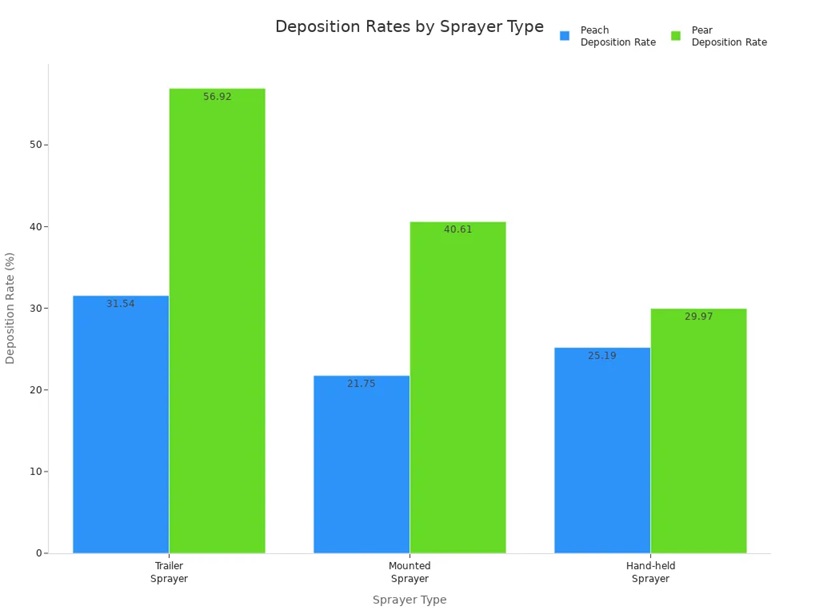
You can test how well you sprayed by putting water-sensitive paper in different parts of the canopy. If the spray hits the paper, that spot got enough pesticide.
Overlap and Coverage Checks
You get full coverage by letting spray patterns overlap. Make sure the overlap at the end of the boom is the same as along the boom. An off-center nozzle at the end helps you get 100 percent overlap. This stops you from missing spots and wasting pesticide.
-
Put water-sensitive paper in the canopy to check for missed spots.
-
Look for wet spots (too much spray) and dry spots (not enough spray).
-
Change how you spray if you see problems.
Note: Always check if your spray is even each time you spray. This helps you find and fix problems before they hurt your crop.
Equipment Care and Safety
Cleaning and Maintenance
You need to clean your orchard air-blast sprayer often. After you finish spraying, take out leftover pesticide. Rinse the tank and pipes with water. This stops chemicals from building up inside. Build-up can block nozzles and break parts. Clean sprayers work better and last longer. Cleaning also keeps different sprays from mixing. This protects crops that are sensitive.
Here are the most important maintenance tasks:
|
Maintenance Task |
Description |
|---|---|
|
Internal sprayer cleaning |
Remove pesticide mixture quickly after spraying and rinse tank and plumbing. |
|
Nozzle maintenance |
Check and clean nozzles often for proper spray patterns and coverage. |
|
Pump care |
Make sure the pump works well and lubricate the PTO shaft after each use. |
|
Seasonal preparations |
Calibrate at the start of the season and winterize for storage. |
-
Clean your sprayer to stop breakdowns.
-
Check your sprayer to spray the right amount.
-
You protect your sprayer and your crop.
Tip: Look at your sprayer before and after you use it. Change broken or old parts right away.
Agitation of Mixture
You must keep the pesticide mixture moving in the tank. Agitation mixes everything so each tree gets the right spray. If you do not agitate, heavy stuff sinks to the bottom. This makes spraying uneven and pests harder to control. Too much agitation can make foam or gels. You need to find the right amount.
-
Agitation keeps the mixture even.
-
It stops settling and clogs.
-
You get the right rate of pesticide on each tree.
Hydraulic jet agitators and mechanical agitators work best. Hydraulic jets need 5 to 6 gallons per minute for every 100 gallons. Mechanical agitators mix well at 100 to 200 RPM. Wettable powders need stronger mixing to stay blended.
Personal Protective Equipment
You must wear personal protective equipment when you use pesticides. PPE keeps you safe from chemicals. Always use gear that is clean and not broken. Check gloves, goggles, and coveralls before you start. Follow the instructions for each piece of equipment.
-
Wear gloves, goggles, and protective clothing.
-
Keep your regular clothes in a clean place.
-
Put on and take off PPE in a safe spot.
-
Do not bring dirty PPE home.
-
Take breaks and drink water to stay healthy.
Note: Your safety is important. PPE keeps you healthy every time you spray.
Monitoring and Adjusting
Water-Sensitive Cards
You can use water-sensitive cards to see spray coverage. These cards change color when spray touches them. Put them in different parts of the canopy before spraying. After you spray, check the cards. You will see where spray landed and where it did not. Water-sensitive cards give you quick feedback. This helps you change your sprayer settings right away. When you adjust quickly, you get better coverage and waste less pesticide. Good coverage also helps stop pests from getting resistant to chemicals.
Tip: Use water-sensitive cards every time you change your sprayer or when the weather changes.
Record-Keeping
Keeping good records helps you get better at spraying. Write down what you do each time you spray. This means the date, time, weather, nozzle type, and how much pesticide you use. Good records help you:
-
See which pest control methods and times work best
-
Plan how to stop pests from becoming resistant
-
Track when you cannot replant because of soil residues
-
Show when you sprayed for food processors
-
Check if using less pesticide still works
-
See which nozzle types and sizes give better coverage
-
Decide if a chemical worked, even at lower rates
-
Avoid buying too much pesticide
-
Stop injury from leftover chemicals and help with crop rotation
When you keep good notes, you can look back and see what worked and what did not. This helps you make better choices next season.
Continuous Improvement
You should always try to make your spraying better. Watch for signs that you need to change your methods. For example, check the weather before you spray. Do not spray when wind is less than 3 mph or during temperature inversions. Make sure your sprayer is set up and working well.
Here are some important things to watch:
|
Key Indicator |
Description |
|---|---|
|
Total Leaf Area |
Change your dose based on how many leaves are on the trees. |
|
Sprayer Efficiency |
Check if your sprayer covers the trees well and uses pesticide wisely. |
|
Deposition on Leaves |
Look at how much spray lands on the leaves and if it spreads evenly. |
Note: Small changes can make a big difference. Keep checking, writing down, and changing things to get the best results every season.
You can get better pesticide coverage in your orchard by picking the right nozzle. Set the air and pressure to the correct levels. Spray when the time is best. Clean your sprayer often and make sure it is calibrated. Use water-sensitive cards to check your spray. Write down what you do each time you spray. Always wear protective gear when you spray.
Small details matter a lot. They help your trees stay healthy and keep you safe. Try these changes now for better results and a stronger orchard.




 +86-025-87150950
 globalsales@sinosorob.com
 +86 15366193219